旅游配套
Tourism Infrastructure
方案入围前12
Proposal Selected in Top 12
武夷山,福建,中国
Wuyishan, Fujian, China
2023.08 ~ 2023.10
武夷山国家公园拥有同纬度最完整、最典型的中亚热带原生性森林生态系统,森林覆盖率95.8%,被誉为“鸟的天堂”、“蛇的王国”、“昆虫的世界”,是我国首批五个国家公园之一,也是唯一的“世界文化与自然双遗产”国家公园。
国家公园的首要任务在于保护,在保护的基础上通过恰当的组织和安排,承担一部分科学观测,教学实习,科普教育以及有限度的游憩休闲等功能。所以国家公园将实行访客预约机制,进行流量限制。月亮湾驿站作为武夷山国家公园的南大门,既是交通中转站,也是旅行和科普信息的交换台。
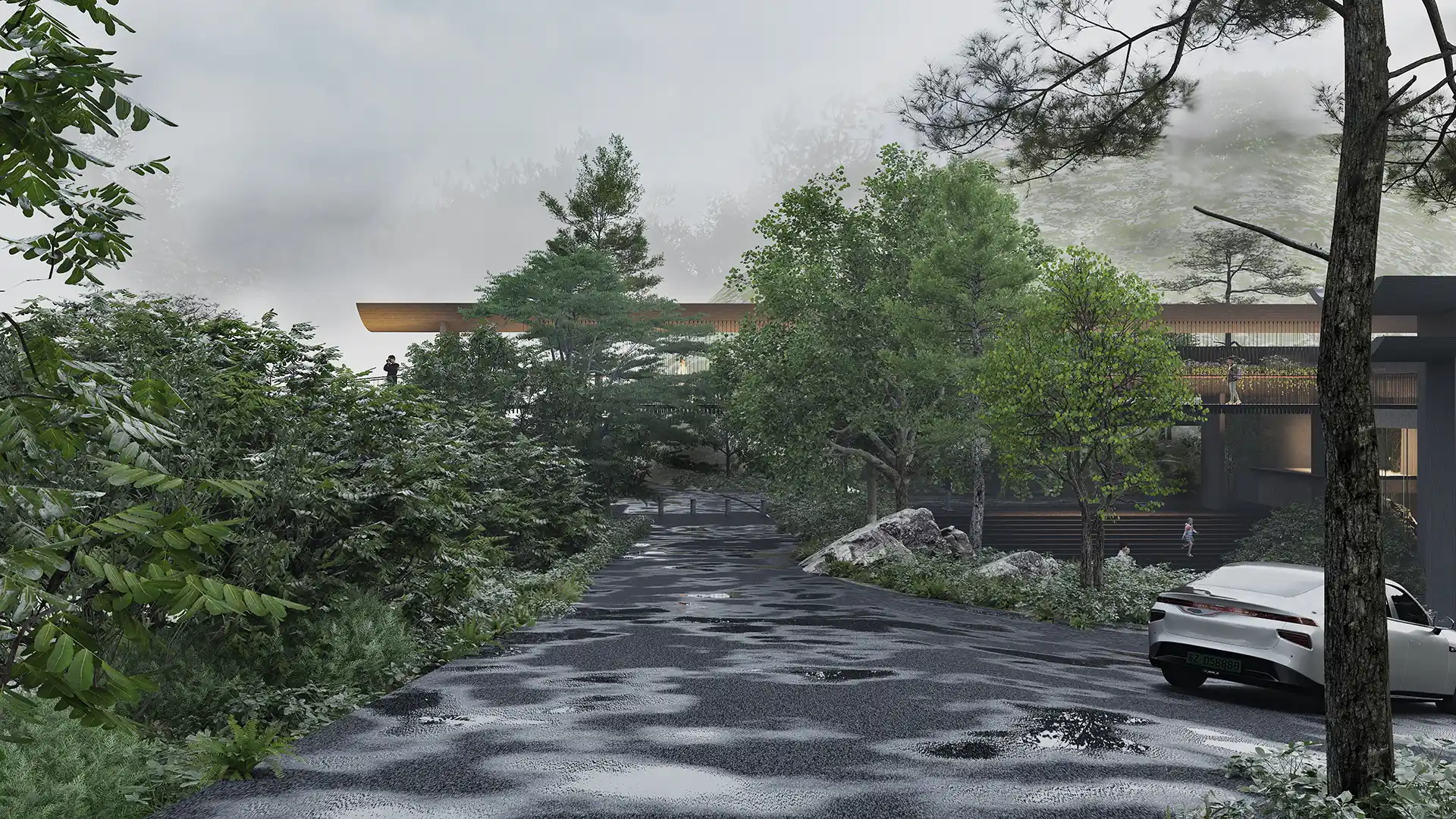
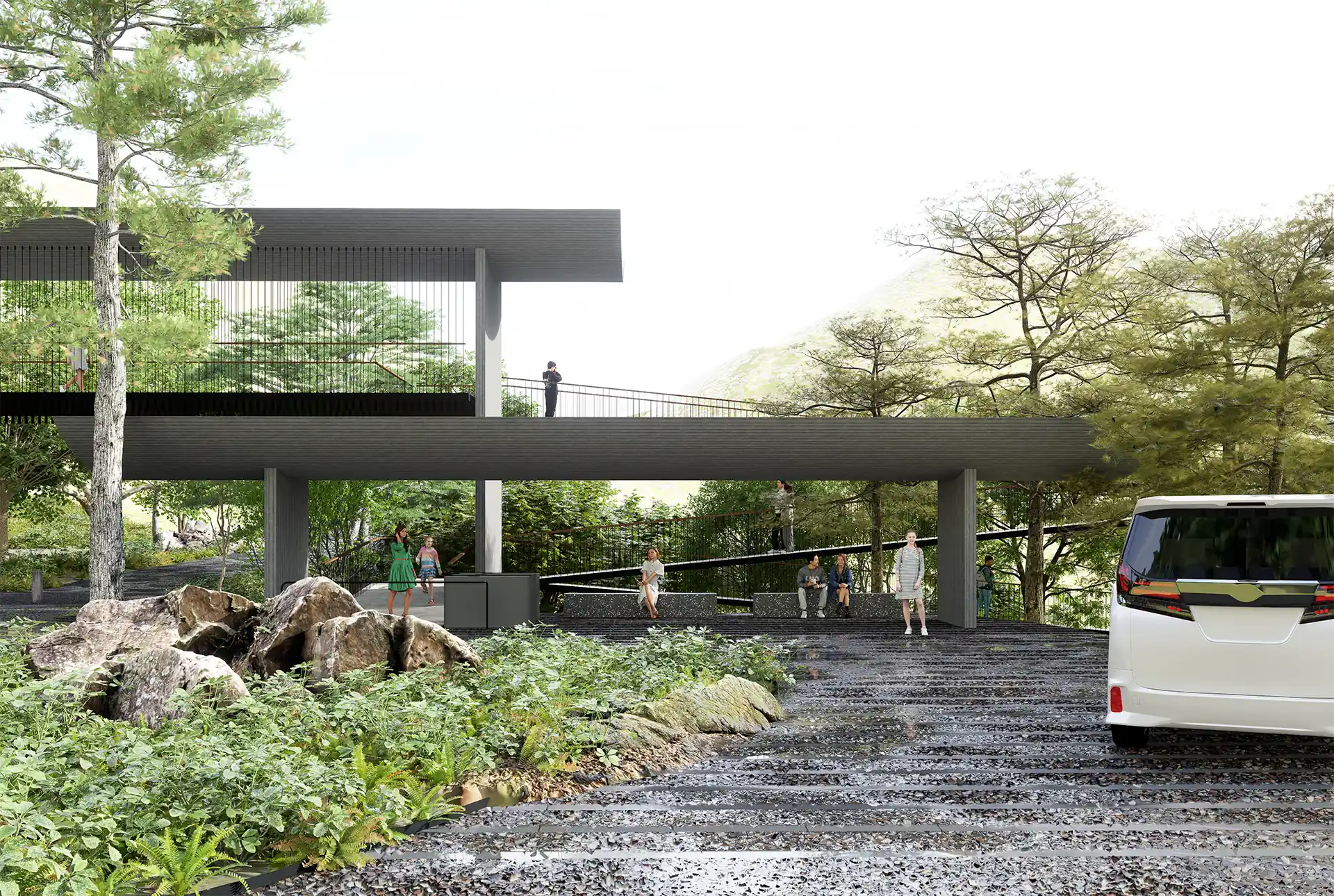
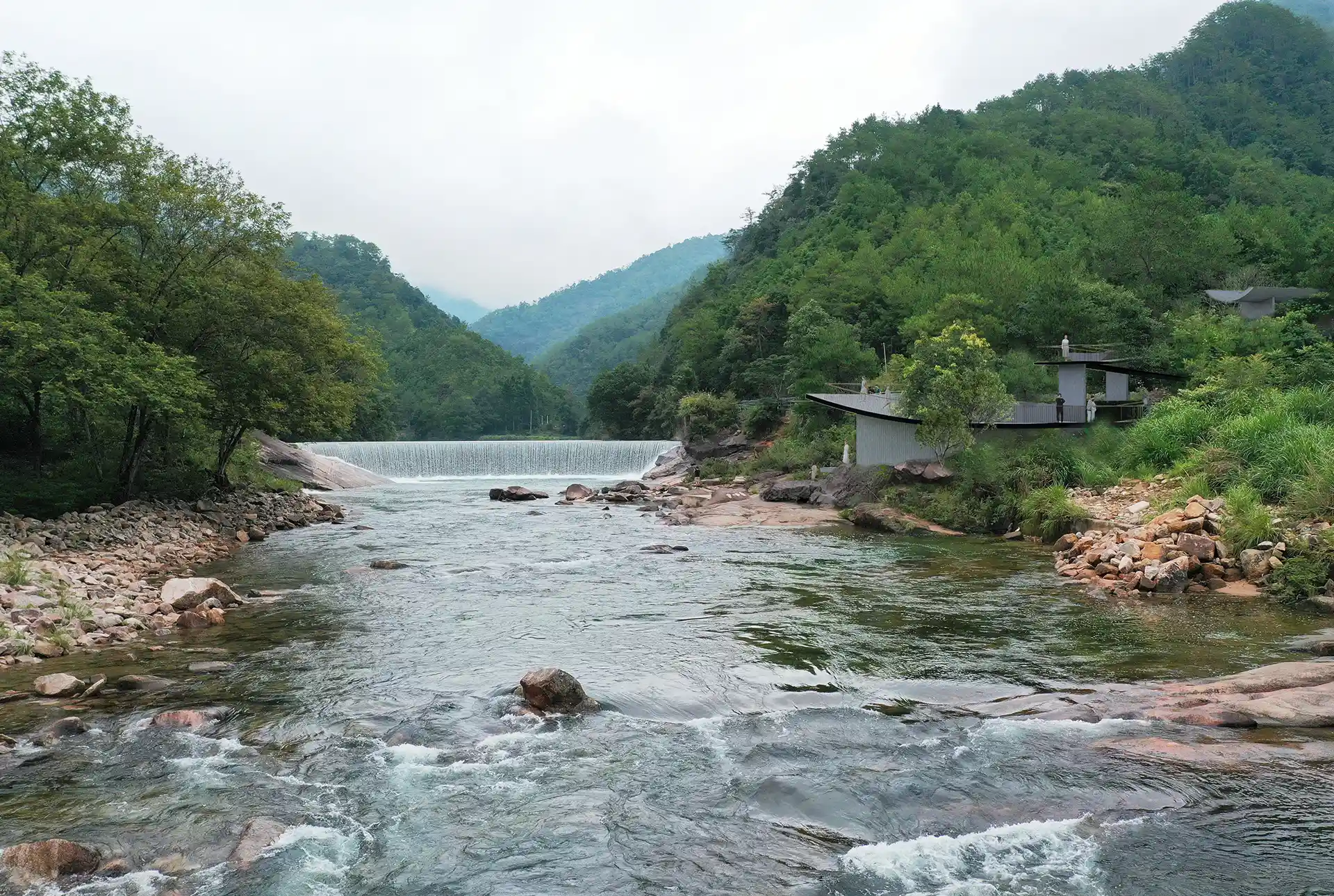
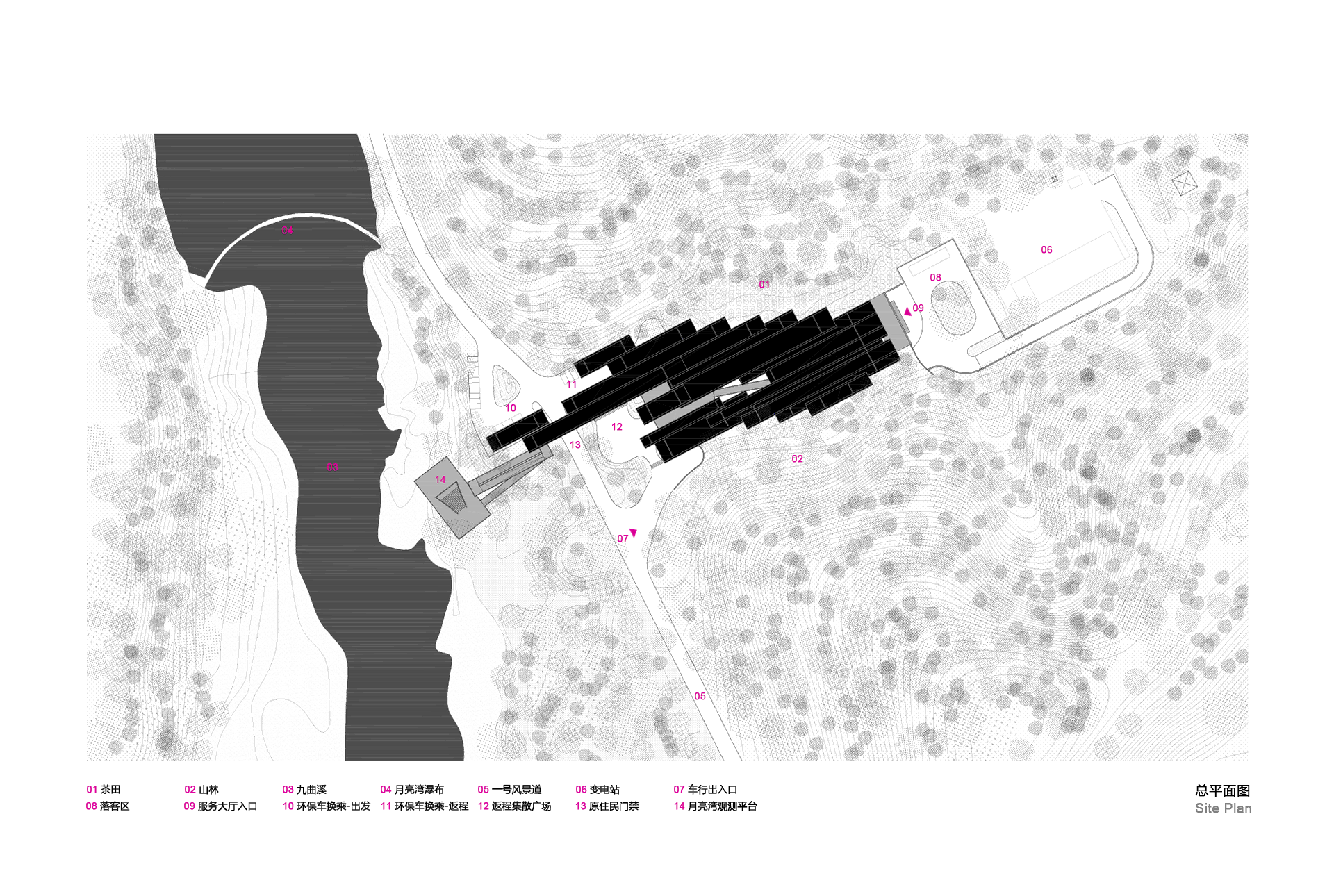
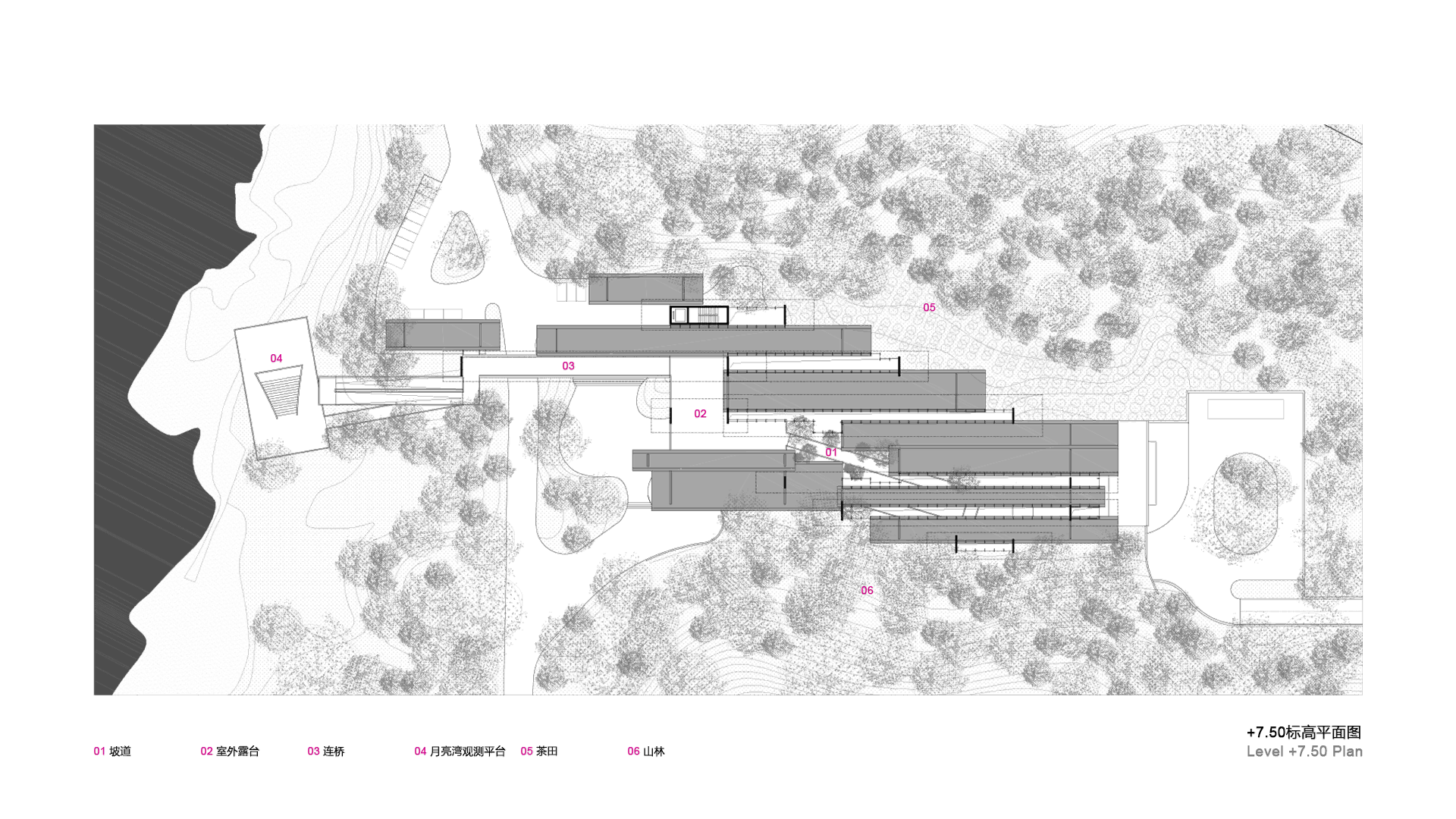
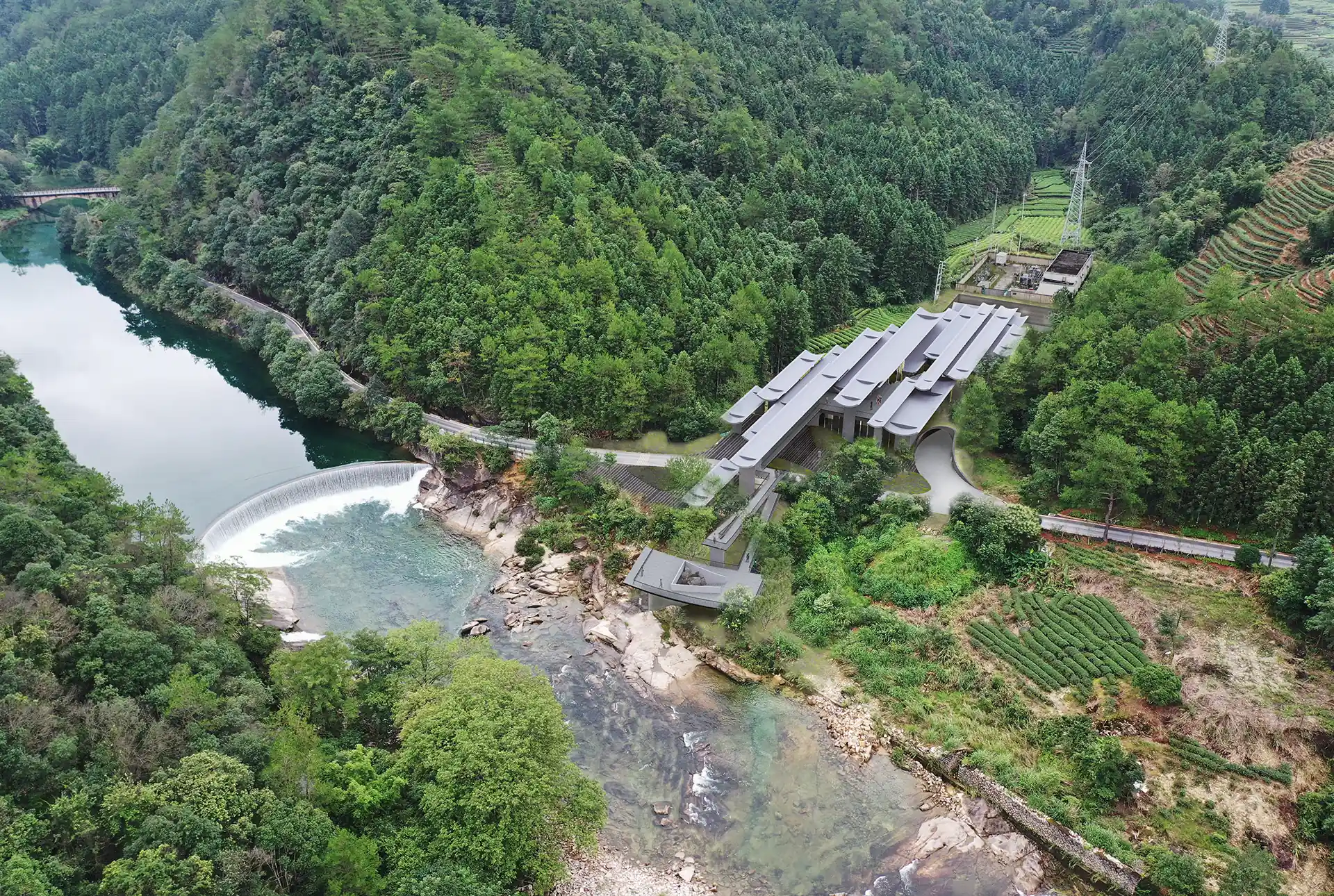
场地紧邻月亮湾瀑布,夹在两个小山包之间呈狭长状,与九曲溪垂直。在场地上,我们需要解决三类人群的流线组织:访客、原住民、场地尽端的变电站工作人员。在场地南侧,利用场地内部和道路的原有高差,设置了一条直通场地尽端的地下车道,将访客大巴直接引入场地的最深处,同时兼顾变电站工作人员的进出。原住民进山回家则只通过1号风景道上的闸口控制,主要限制外来私家车。
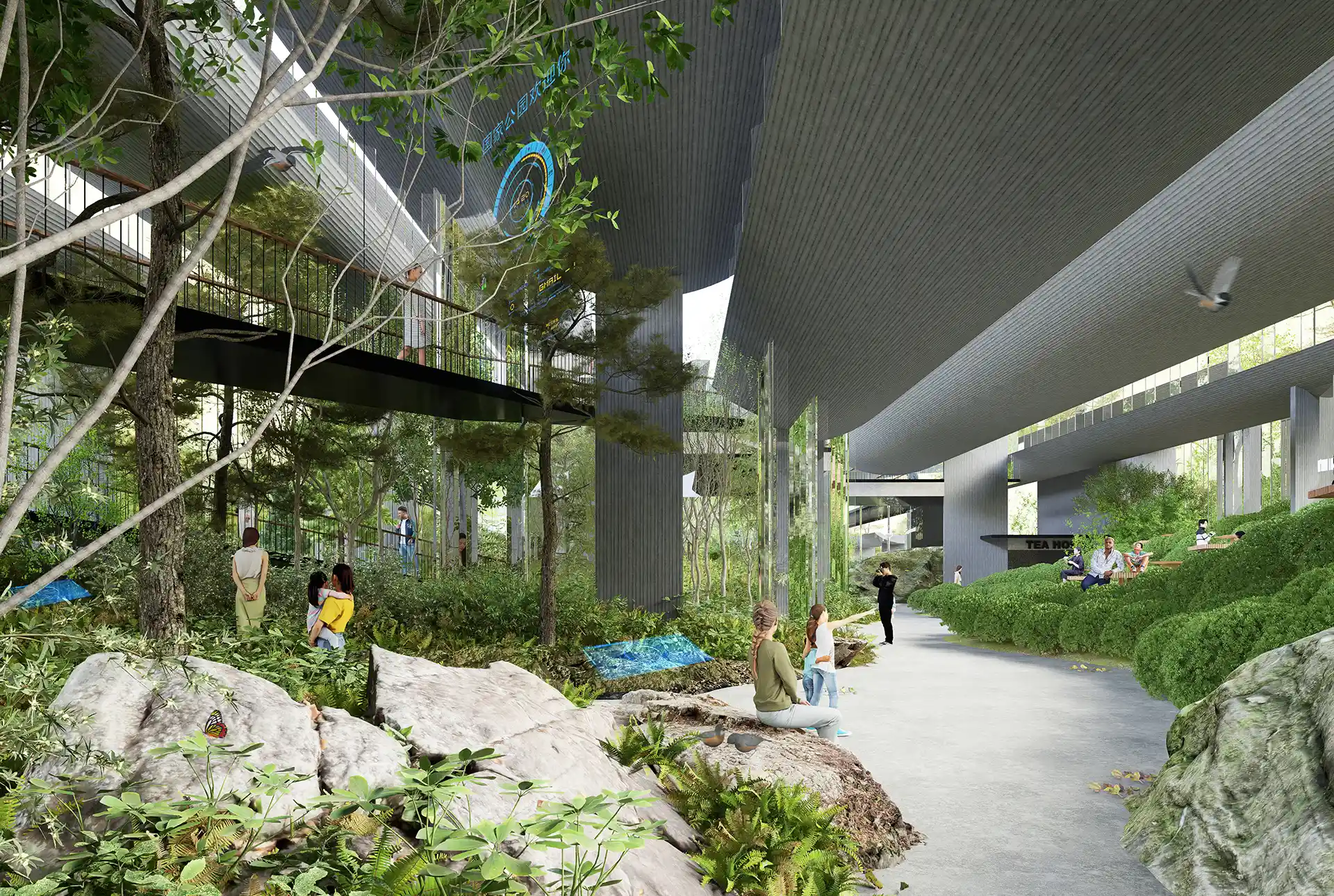
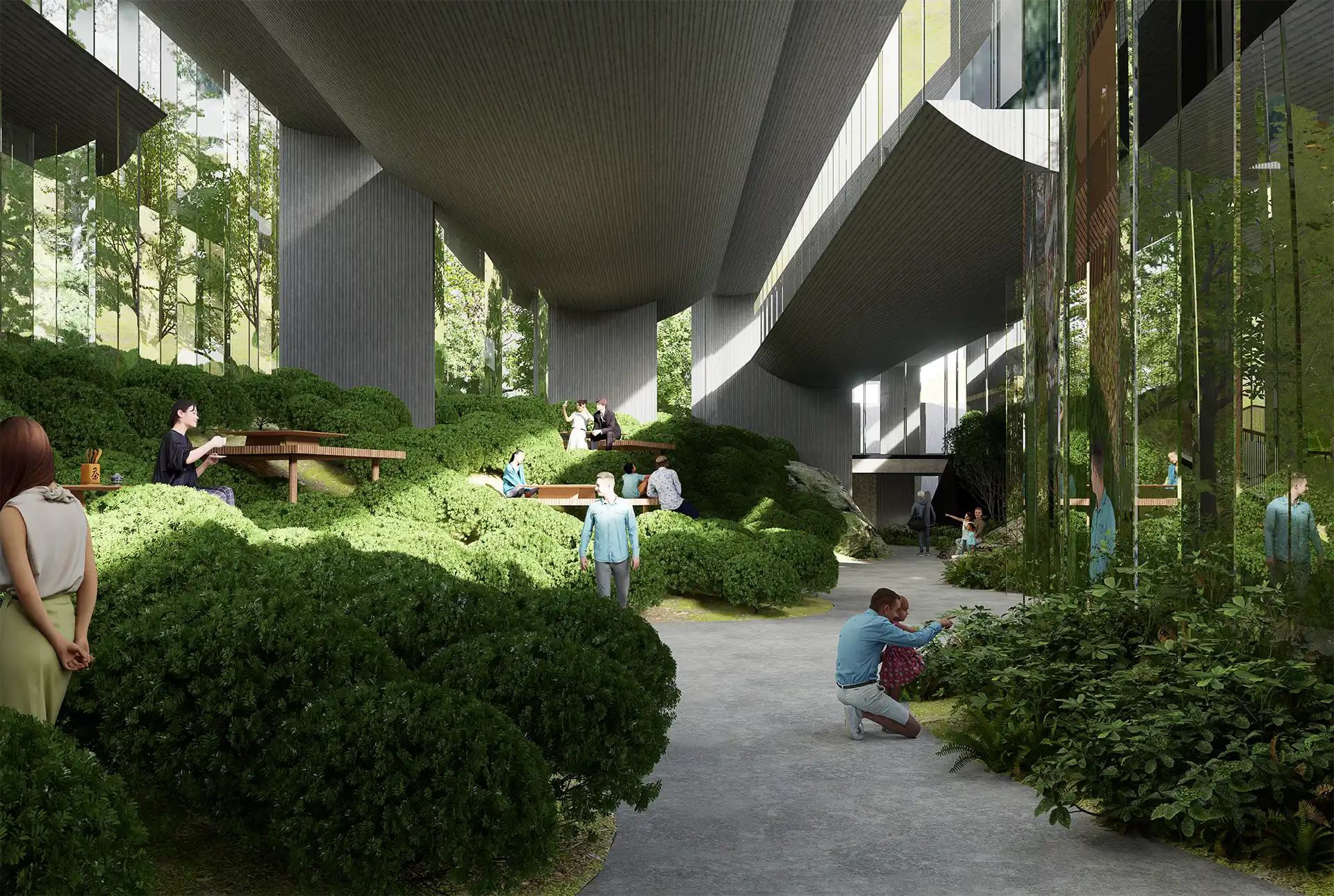
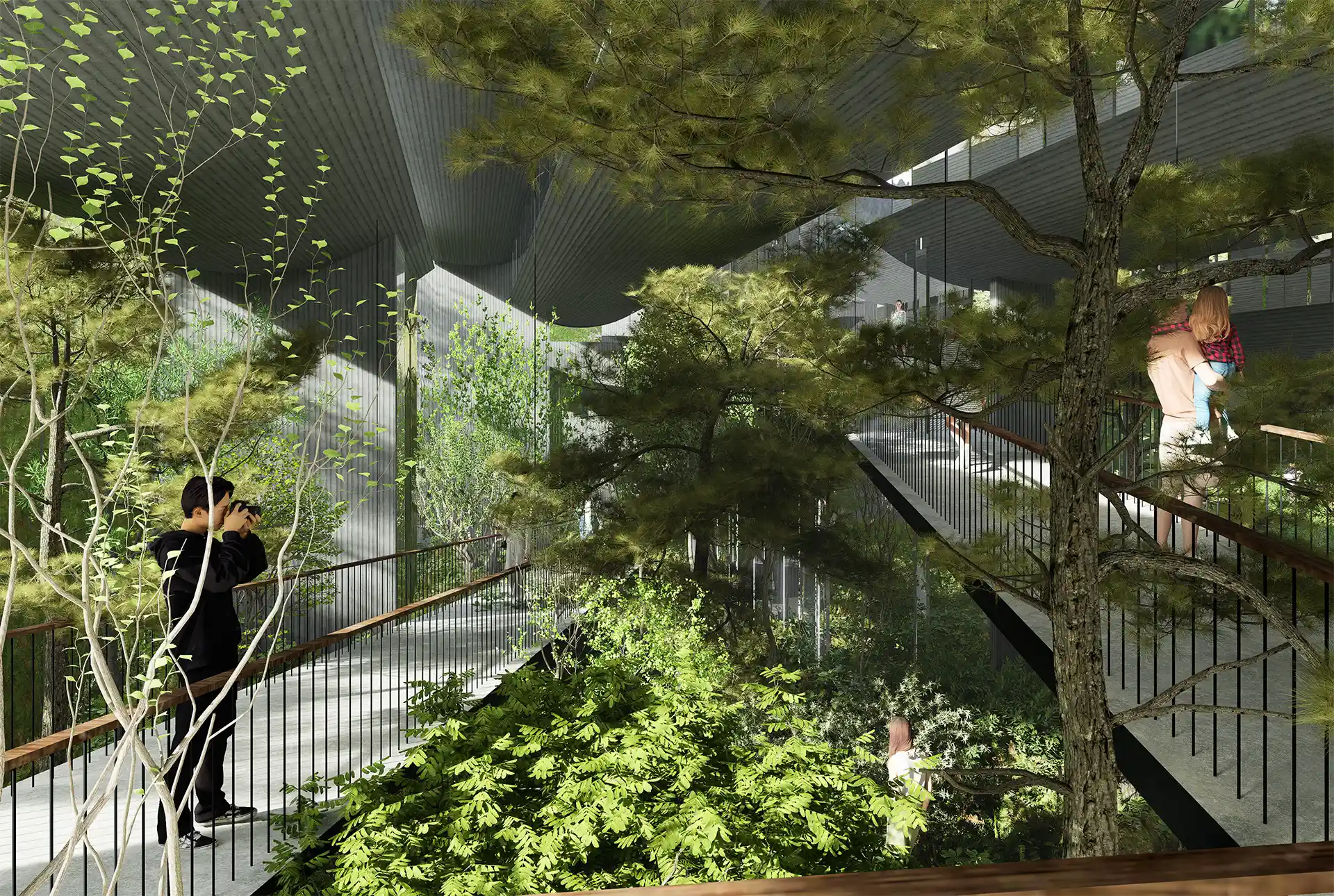
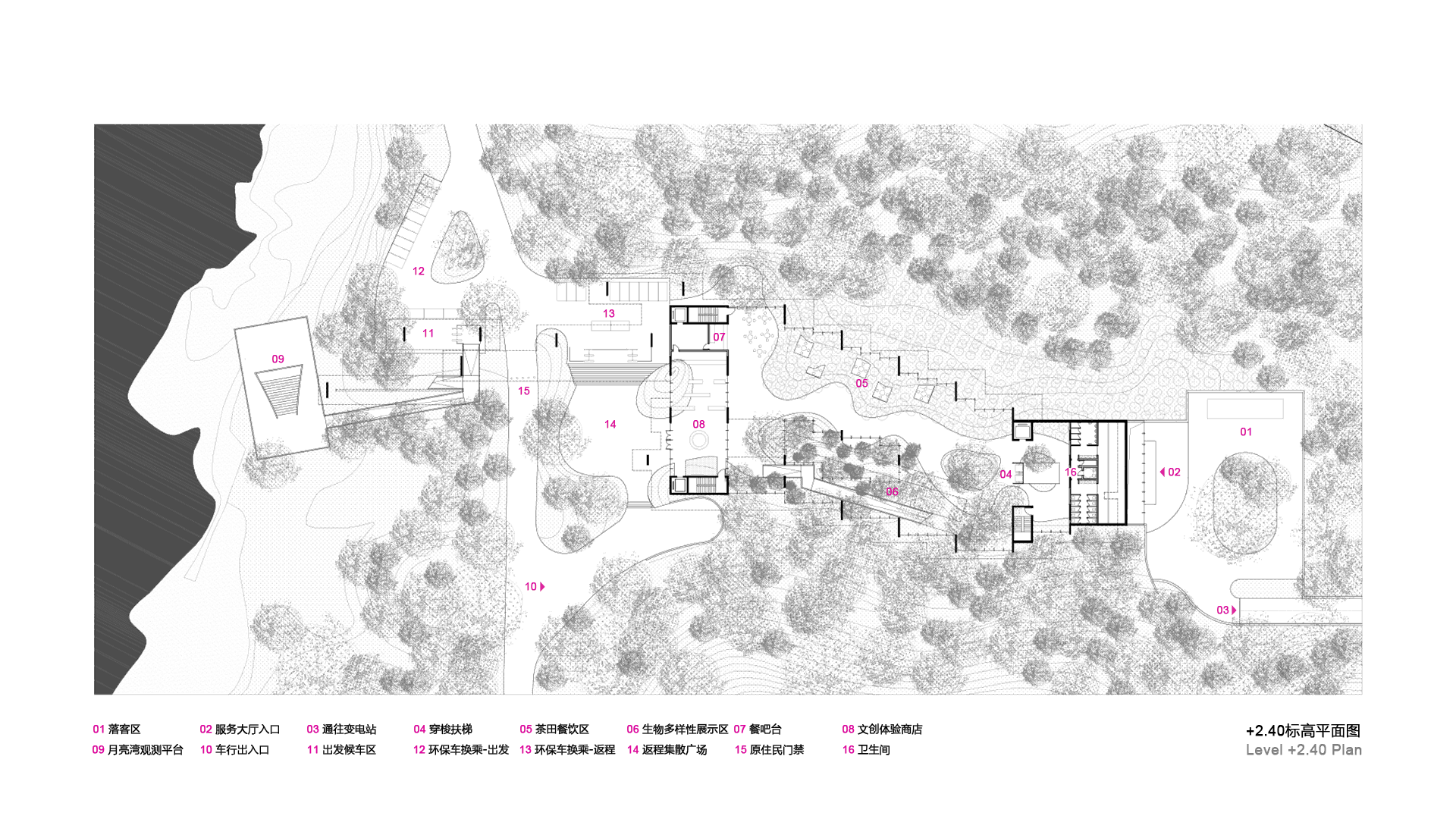
建筑以“竹桥”——大跨度混凝土梁式桥,为基本的空间结构单元,其顶板为反曲截面,争取更大跨度的同时,也给人以竹筏和茶则的在地符号联想。“竹桥“长短不一、高低错落,平行错动布置,以最少的接地触点在其下限定出一个开敞流动的空间。在这个大空间中,我们将北侧的茶田和南侧的森林延伸进室内,通透的玻璃幕墙,加上从高处洒下的天光,让室内外融为一体。信息咨询、就餐茶饮、展览展示等功能都被安置在这一空间生境中,让来访的客人在这里松弛地漫游。
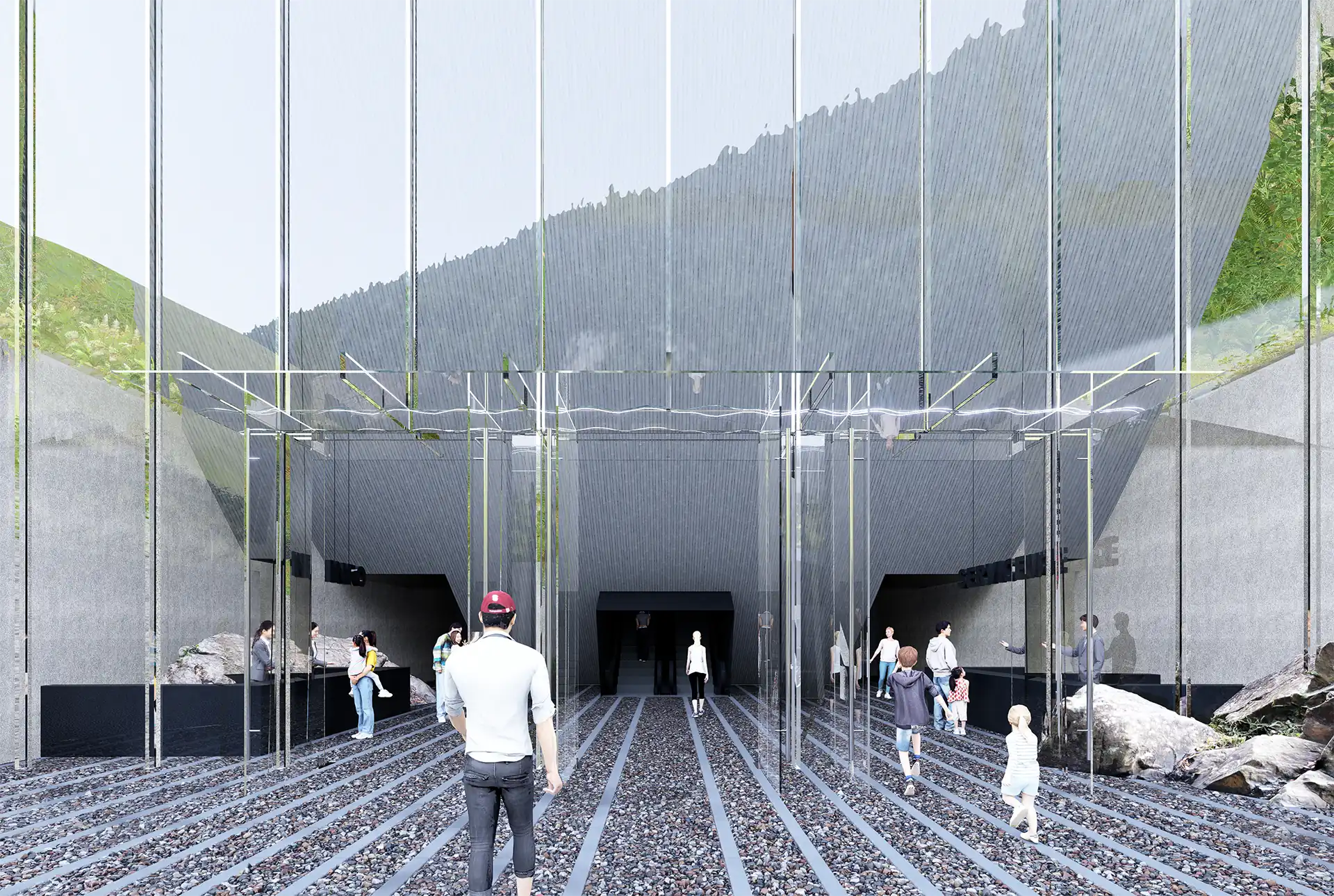
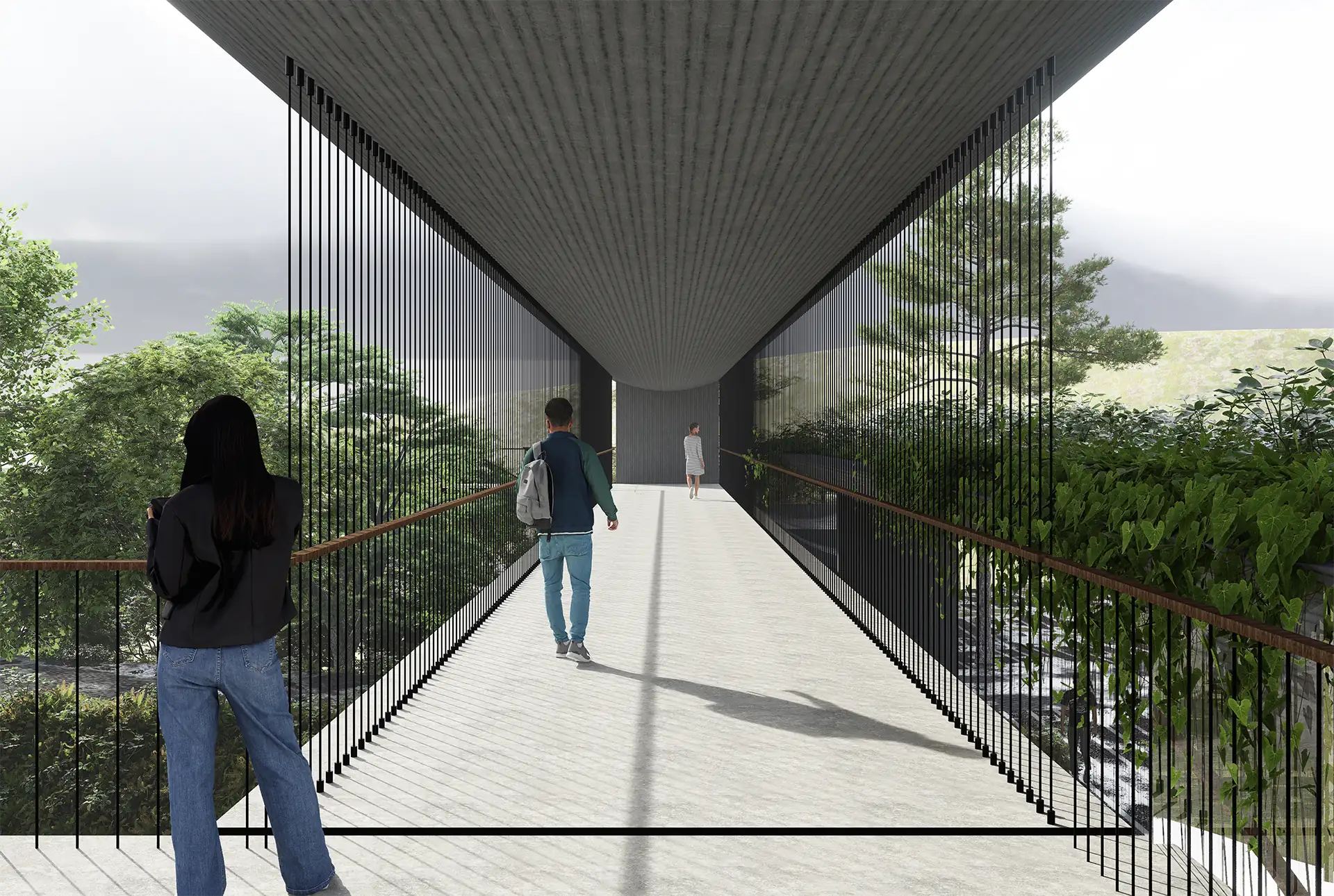
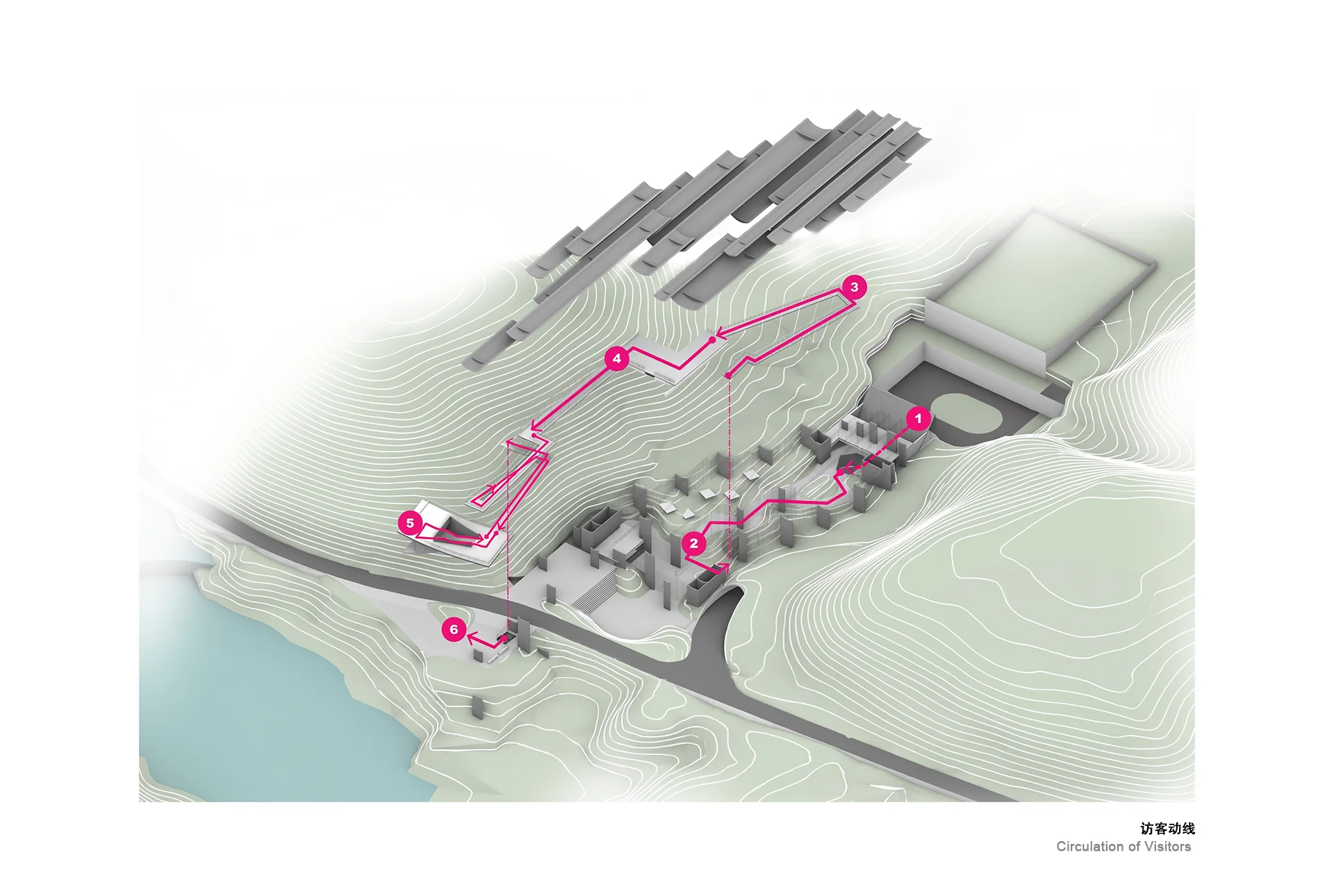
从落客区开始,访客经过门厅乘坐穿梭扶梯到达大厅,在茶田和树林间漫游至林间步道,沿着抬升的步道体验布置其间的互动式展览装置,顺势来到屋顶平台,穿过横跨在一号风景道上的步行桥,走下坡道便来到了九曲溪边的月亮湾观景台和换乘车场。整个空间序列让访客在轻松自由的步行漫游体验中,完成进入国家公园的情绪转换。
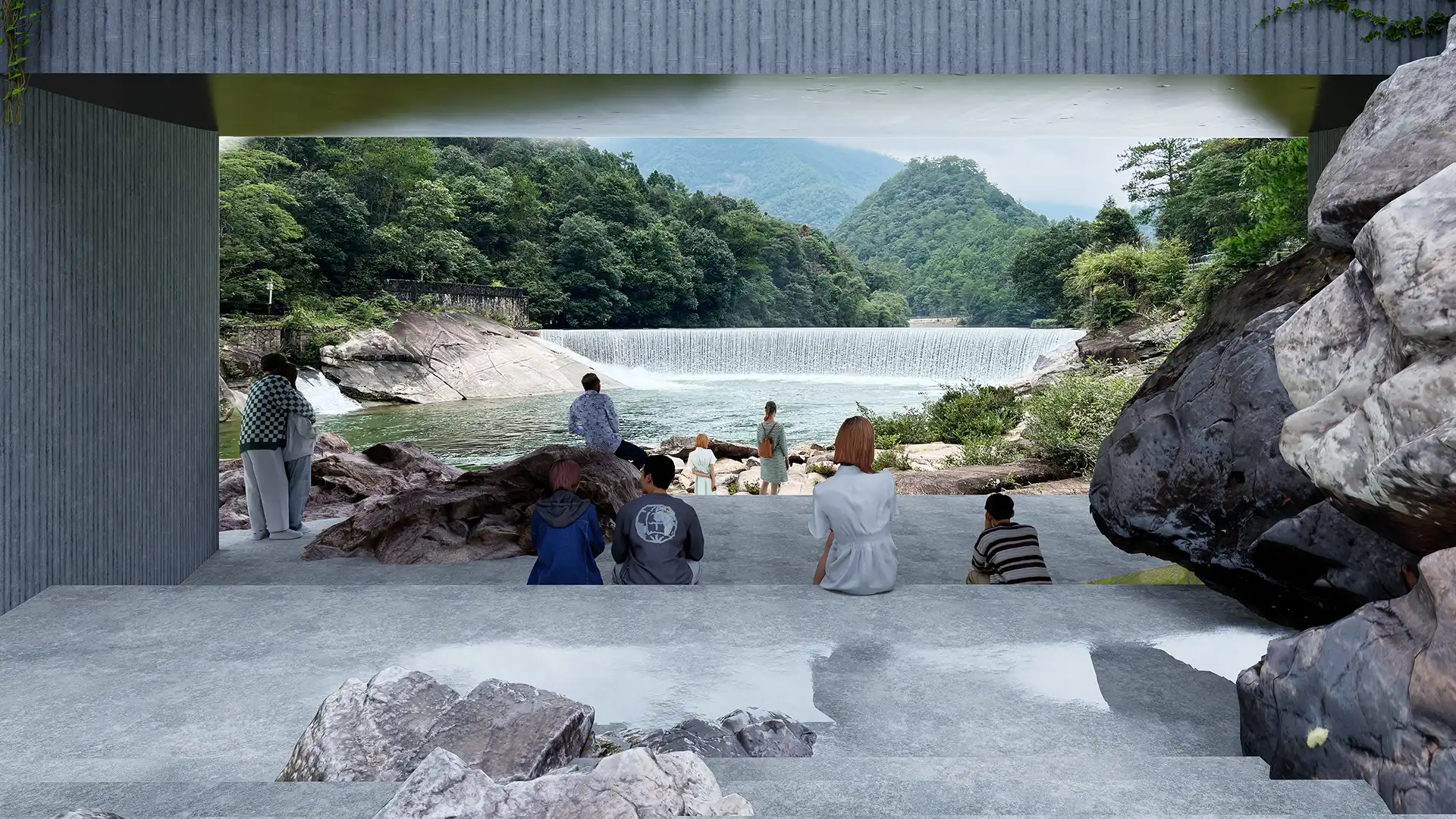
月亮湾观景台是整个体验序列的重点。观景台的剖面设计,将上扬的弧面和下跌的台阶嵌套在一起,提供与月亮湾瀑布对话的两种不同方式。顺着起翘的地面循声走向观景台的边沿,从“只闻其声“到豁然眼前的瀑布水帘,是一种从期待到释放的空间心理体验。而沿着与场地原始石块咬合在一起的台阶拾级而下,一路走到水边,与溪水亲近,或静坐在台阶上,以更低的视角观看瀑布,又是另一番意趣。
Wuyishan National Park boasts the mostintact and typical mid-subtropical primary forest ecosystem at the samelatitude, with a forest coverage rate of 95.8%. It is celebrated as “a paradiseof birds,” “a kingdom of snakes,” and “a world of insects.” It is one ofChina’s first five national parks and the only national park in Chinadesignated as a UNESCO World Cultural and Natural Heritage site.
The primary mission of a national park isprotection. On the basis of protection, through appropriate organization andarrangement, it also takes on a range of functions, including scientificobservation, teaching practice, science education, and limited recreation andleisure. Accordingly, the national park will implement a visitor reservationsystem and impose limits on visitor numbers. As the southern gateway toWuyishan National Park, Moon Bay Visitor Station serves as both a transportinterchange and a hub for travel and science-education information.
The site, adjacent to Moon Bay Waterfall,is a narrow, elongated strip nestled between two small hills, runningperpendicular to the Nine-Bend Stream. On the site, we need to organizecirculation for three groups of users: visitors, local residents, and thesubstation staff at the far end of the site. On the south side, an undergrounddriveway takes advantage of the existing level difference between the site andthe road, running directly to the far end of the site and bringing visitorcoaches into its deepest part, while also accommodating the entry and exit ofsubstation staff. Local residents entering the mountains to return home passonly through a checkpoint on No. 1 Scenic Road, which mainly restricts privatevehicles from outside.
The building adopts the “bamboo bridge”—along-span concrete beam bridge—as its basic spatial structural unit. Its roofslab has a recurved section, achieving a larger span while also evoking localassociations with bamboo rafts and tea scoops. The “bamboo bridges,” varying inlength and staggered in height, are arranged in parallel and offset from oneanother, defining an open, flowing space below with minimal ground contactpoints. Within this large space, we extend the tea fields on the north and theforest on the south into the interior. Fully glazed curtain walls, togetherwith daylight pouring down from above, blur the boundary between inside andoutside. Functions such as information consultation, dining and tea service,and exhibition and display are placed within this spatial habitat, allowingvisitors to roam at ease.
Starting from the drop-off area, visitorspass through the entrance hall and take shuttle escalators to the main hall.They then wander among the tea fields and woods to the forest boardwalk, followthe elevated walkway to experience the interactive exhibition installationsarranged along it, and arrive naturally at the roof terrace. Crossing thepedestrian bridge that spans No. 1 Scenic Road and descending the ramp, theyreach the Moon Bay viewing platform and shuttle transfer area by the Nine-BendStream. The entire spatial sequence allows visitors to complete their emotionaltransition into the national park through a relaxed, free, and meanderingwalking experience.
The Moon Bay viewing platform is the highlight of the entire experiential sequence. Its sectional design nests anupward-curving surface and descending steps together, offering two differentways to converse with Moon Bay Waterfall. Following the sound along the risingground toward the edge of the platform, moving from “hearing it before seeingit” to the waterfall curtain suddenly opening before one’s eyes, is aspatial-psychological experience that moves from anticipation to release.Descending step by step along the stairs interlocked with the site’s originalrocks down to the waterside, getting close to the stream, or sitting quietly onthe steps to view the waterfall from a lower perspective, offers yet anotherkind of delight.